Chapter Zero Slovenia
Planica Sets the Stage for a Conversation on the Future of Winter Sports in a Changing Climate

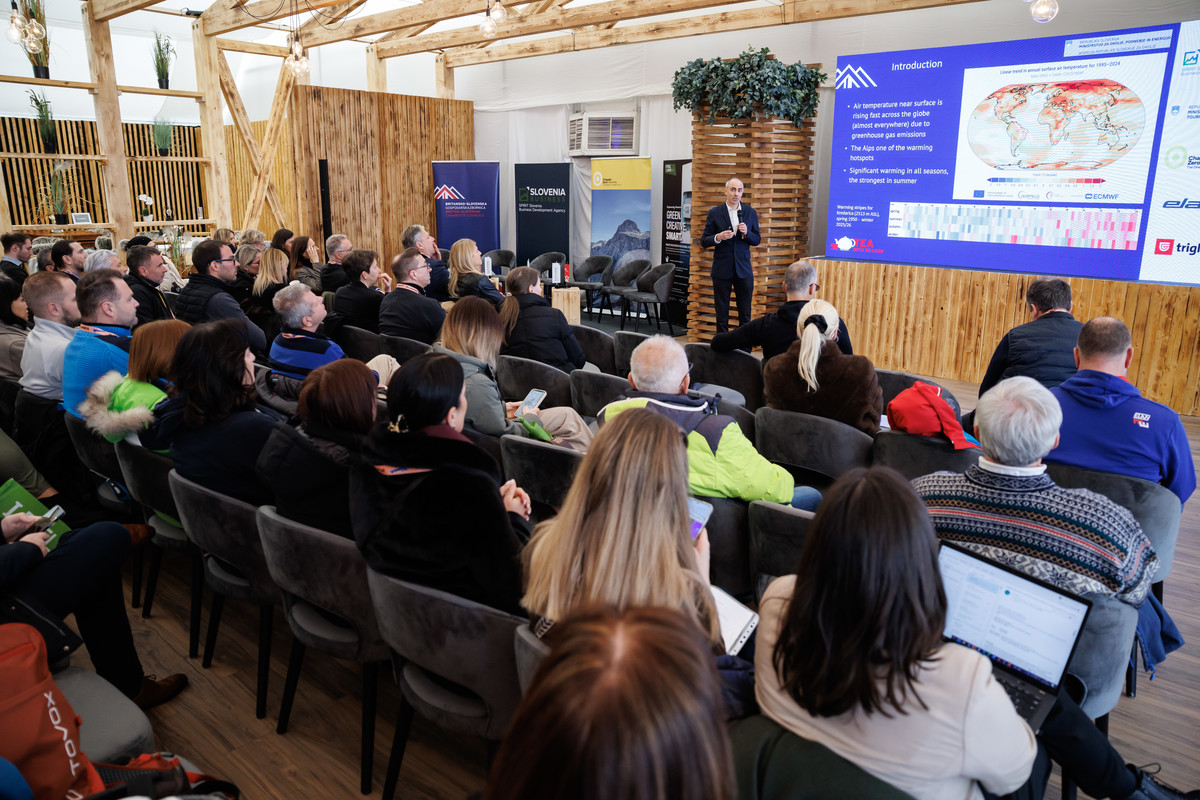
Planica, 26 March 2026 – On the opening day of the FIS Ski Jumping World Cup in Planica, our Tea with Reason: The Future of Winter Sports and Climate Resilience in Slovenia brought together key stakeholders to discuss how climate change is already affecting Slovenia’s winter sports ecosystem and what can be done to strengthen its resilience going forward. The event was organised together with SPIRIT Slovenia and the Ministry of the Economy, Tourism and Sport, in partnership with Chapter Zero Slovenia, Zavarovalnica Triglav, and Elan. The timing of the event carried particular symbolism. On the very day when Planica traditionally welcomes schoolchildren from across Slovenia, introducing younger generations to winter sports, the discussion also raised an increasingly pressing question: how to preserve this tradition in a world where snowy winters can no longer be taken for granted.
As one of the most iconic symbols of Slovenian sport, Planica provided a fitting setting for a discussion on the future of winter sports. Participants highlighted that shorter snow seasons, rising temperatures, and increasingly unpredictable winter conditions are already affecting the development of winter tourism destinations. The Alpine region is warming faster than the global average, with winter temperatures in the Julian Alps rising by around 2.5°C over the past 50 years.
Participants were welcomed by Miha Košak, Vice Chairman of the British-Slovenian Chamber of Commerce and Chairman of Chapter Zero Slovenia, and Nataša Kos, Deputy Director at SPIRIT Slovenia.
Nataša Kos noted that Planica, as a key part of Slovenia’s identity, clearly reflects the reality we are facing today: "Winter sports depend on conditions that are becoming less predictable and can no longer be taken for granted. She emphasised that this is not a distant concern, but a present reality already influencing businesses, investment planning, and risk management. Companies that adapt early, invest in efficiency, new technologies, and more sustainable practices are proving to be the most resilient."
Miha Košak highlighted that winter sports are one of the clearest examples of how climate risks are becoming a direct business, development, and governance issue: "hese changes are no longer theoretical, they are already affecting communities, infrastructure, investment, and long-standing traditions. Climate resilience, adaptation, and cross-sector cooperation must become part of strategic decision-making."
In the expert keynote, Gregor Vertačnik (Slovenian Environment Agency) and Miha Pavšek (ZRC SAZU) presented key climate trends shaping the future of winter sports in Slovenia. They pointed out that winters in the Alpine region are becoming milder, while both snowfall and snow cover duration are decreasing, particularly at lower altitudes.
In Kranjska Gora, the amount of new snowfall has decreased by approximately one third, while snow cover duration has shortened by one to two months in recent decades. On a global scale, glaciers lost around 6,500 billion tonnes of ice between 2000 and 2023, one of the clearest indicators of accelerating climate change.
The panel discussion, moderated by Maja Ratej (Val 202), that followed brought together perspectives from sport, industry, insurance, and diplomacy. Speakers included Nigel Baker, Chargé d'Affaires at the British Embassy in Ljubljana; Nina Kelemen, Head of Sustainability at the Triglav Group; Melanja Korošec, Vice President of the Ski Association of Slovenia; Ernest Kovač, Secretary at the Association of Slovenian Ropeway Operators; and Daniel Neulichedl, Export Director at TechnoAlpin.
The discussion highlighted how winter sports are adapting to changing conditions. Ernest Kovač raised that ski resorts currently average between 100 and 150 ski days per season, with some, such as Krvavec, expecting around 150 operating days this year. Vogel, the highest-lying Slovenian ski resort, continues to operate exclusively on natural snow. Melanja Korošec pointed out that interest in winter sports among young people remains strong, but rather changes in the way they approach them. As she explained, "winter sports are no longer as straightforward as they once were, as they require more planning, organization, and coordination; moreover, in many places, there are no longer locally accessible ski resorts." She also emphasized the importance of initiatives like "Šolar na smuči", which aim to introduce children to winter sports and give them their first experiences on the snow. Daniel Neulichedl emphasised that ski resorts are increasingly dependent on technical snowmaking, but that the key challenge today is not just technology itself, but solutions that remain efficient at marginal temperatures while also minimising energy use.
From the insurance perspective, Nina Kelemen noted that the sector is already feeling the impact of climate change. Referring to the 2023 floods, she noted that Triglav recorded claims ten times higher than the usual average. She also pointed to the importance of preventive measures and digital solutions, including tools that help users better understand their exposure to risks such as floods or earthquakes. She added: "Winter sports in Planica have for decades embodied respect for nature, community, and future generations, values that we at Triglav also uphold through our long-standing partnership with Planica and the "Otroci Triglava" initiative." Nigel Baker pointed to the international dimension of the challenge, noting: "The evidence is clear. Climate change is already negatively affecting winter sports, from the ski industry in Scotland and tourism in Slovenia to the reliability of competition schedules and even the viability of the Winter Olympic Games. International cooperation on climate resilience is essential."
Photo gallery is available here.
Photo credit: STA/Nebojša Tejić